On commercial projects, flooring is often chosen because it looks right for the space. It fits the design intent, works with the surrounding finishes and gives the client the clean, durable appearance they wanted. But in wet areas, that is only part of the story.
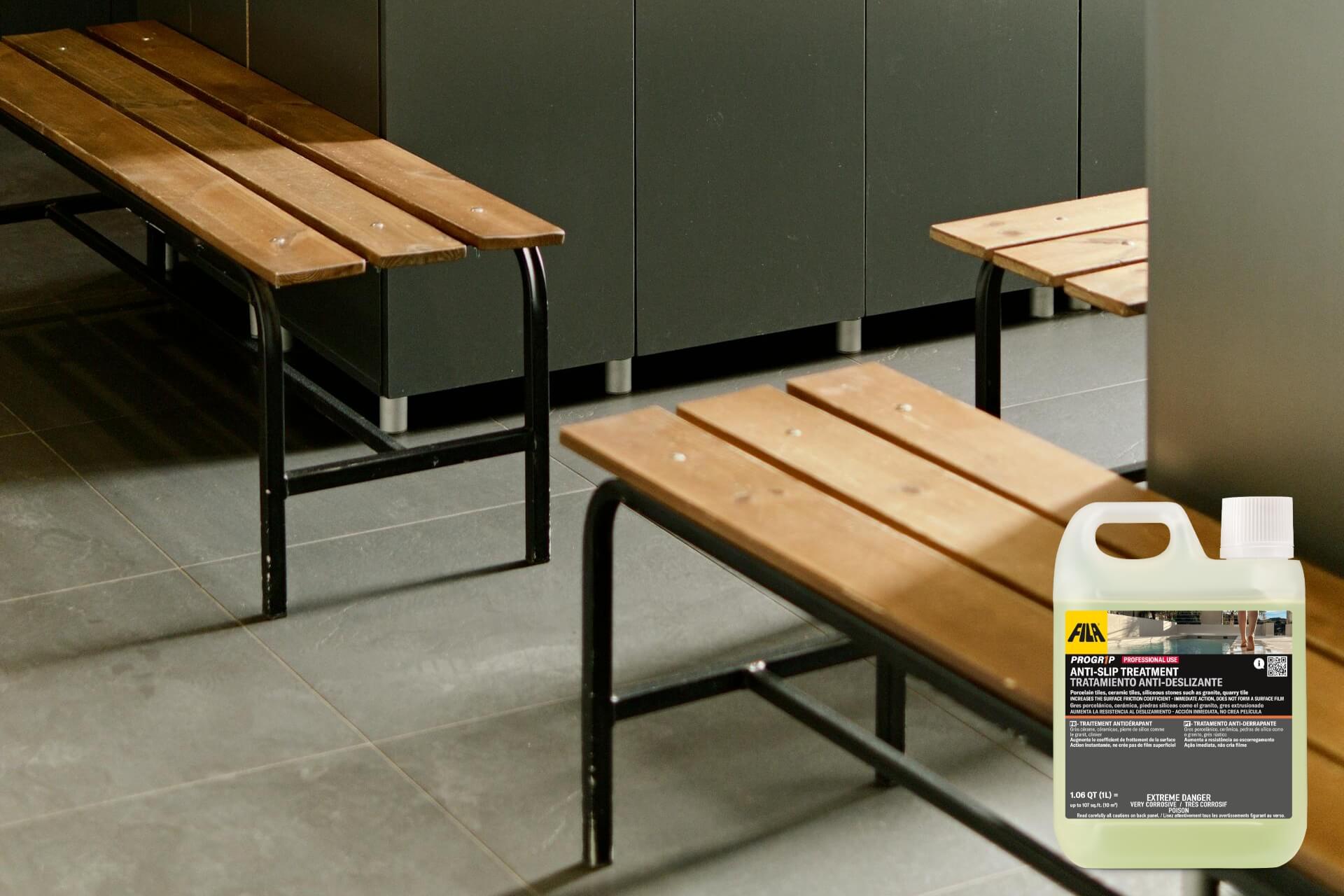
In locker rooms, clubhouse showers, school athletic facilities, and other shared-use spaces, the surface has to work hard beyond the initial install. Once people are moving through with gym bags, towels, uniforms and athletic gear, the floor needs reliable grip in real conditions, not just a finish that meets the visual brief on paper.
That is where slip resistance can become a serious issue. Hard surfaces are often chosen for their professional, long-lasting finish, but if they do not provide enough grip when wet, the problem quickly moves beyond aesthetics. It becomes a safety concern, a maintenance headache and a potential liability for the facility owner, operator and installer.
Newly launched, PROGR1P is a professional anti-slip solution for suitable tile and stone surfaces, including porcelain, ceramic, granite, and quarry tile. Supplied ready to use, it increases the surface’s friction coefficient by creating a microporous effect on the material. This helps reduce the risk of slipping on damp or wet floors, whether users are walking in shoes or barefoot.
For suitable surfaces, PROGR1P gives contractors and the wider jobsite team more flexibility when working on high-use wet environments. Rather than compromising the look of the scheme, teams can choose a finish that supports the overall design, then improve its slip resistance where needed. The product is non-film-forming, leaves no residue and does not change the appearance of the material, whether wet or dry. Visually, the surface remains the same, but the improvement in grip becomes noticeable when water is present, which is when it matters the most.
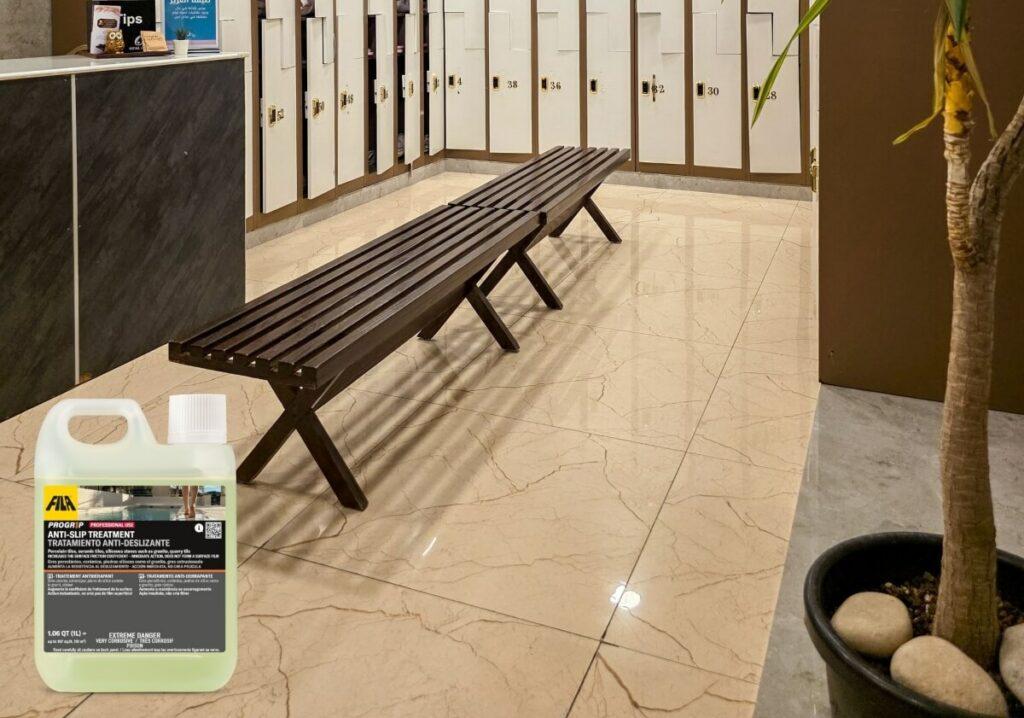
Before application, we recommend carrying out a preliminary test to determine the right contact time for the specific surface. The floor should also be clean and dry, with adjacent materials protected. After treatment, a neutralizing wash with CLEANER PRO diluted 1:200 is then recommended.
For added reassurance, FILA also works with contractors who can provide before and after DCOF testing and certification. This gives project teams documented evidence of improved slip performance, helping support safety requirements and close-out paperwork in demanding commercial and institutional environments.
The result is a stronger handover story, with a surface that looks right and performs in wet conditions.