

Porcelain tiles are durable and low-maintenance, but when staining, haze, footprints, streaks, or other appearance issues arise , they can quickly lead to customer complaints or concerns about tile failure.
For contractors, installers, distributors, and tile showroom teams, effective troubleshooting can help determine whether the problem lies with the porcelain itself or with something on its surface. This guide outlines how to investigate common porcelain cleaning complaints, identify likely causes, test the appropriate cleaning solution and assess the results before a tile is considered defective.
How to Approach a Porcelain Cleaning Complaint
When a cleaning issue is reported, a methodical approach can help narrow down the possibilities.
- Look At The Complaint: Is the customer seeing haze, footprints, streaking, mineral marks, stubborn stains or rapid resoiling?
- Ask When It Appeared: Was the issue present immediately after installation, after grouting, following a cleaning treatment or only after the floor had been in use?
- Consider What May Be On the Surface: Could it be organic contamination, an inorganic deposit, grout residue or an applied coating?
- Choose the Appropriate Cleaning Chemistry: Match the cleaner to the type of contamination being investigated.
- Arrange A Small Area Test: The appropriate product should be tested according to its application instructions to see whether the appearance changes.
If the cause remains unclear, use the troubleshooting sequence later in this guide to investigate other possible sources of contamination. Once the issue is resolved, the appropriate ongoing maintenance routine can then be recommended.
This turns a general complaint that the tile “doesn’t look right” into something that can be assessed more objectively.
Organic or Inorganic? Understanding the Type of Contamination
Identifying whether contamination is organic or inorganic can help determine the appropriate cleaning chemistry.
Organic contamination, such as body oils, grease, food residues and ground-in dirt, generally requires alkaline or degreasing action. Inorganic contamination, including cement grout haze, limescale, hard-water deposits and efflorescence , typically requires an acidic cleaner on acid-resistant porcelain.
This is why familiar cleaning methods can fall short. Soap and water may not remove mineral deposits such as limescale, while acidic household solutions such as vinegar are not designed to tackle greasy contamination. The cleaning chemistry needs to match the problem: acid for mineral-based deposits and alkaline/degreasing action for oils and grease.
Common Porcelain Cleaning Issues to Investigate
Hard-Water Marks and Limescale
White deposits or dull marks in areas regularly exposed to water may indicate mineral buildup rather than a defect in the tile.
Where hard-water staining, limescale or similar inorganic deposits are suspected, DETERDEK PRO provides an appropriate cleaning route for acid-resistant surfaces, including porcelain.
Footprints, Greasy Marks and Ground-In Dirt
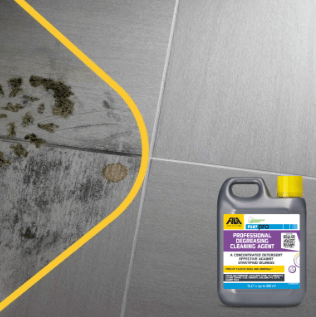
Visible footprints can sometimes appear to be part of the tile, particularly on darker or more uniform porcelain. Oils from skin, feet or footwear are one possible cause, while existing residue can also make prints more noticeable .
Where organic or oily contamination is suspected, PS87 PRO can be tested to clean and degrease the surface. It can be diluted 1:10 for cleaning or 1:5 for heavier buildup, with 4–5 minutes of dwell time before scrubbing, residue removal, and thorough rinsing.
Use the appearance, location and cleaning history as clues rather than assuming every footprint has the same cause.
The Floor Becoming Dirty Again Quickly
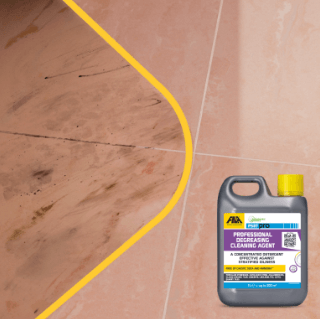
A floor that quickly looks dirty again may have remaining grease or ground-in dirt, but the cleaning method should also be investigated. Review how the floor is being maintained. Dirty mop heads, contaminated wash water or incorrect product dilution can all redistribute soil rather than remove it.
Where buildup is suspected, PS87 PRO can provide corrective cleaning before moving to CLEANER PRO for ongoing maintenance.
Swirl Marks, Streaks and Mop Patterns
Swirls or streaks can sometimes be mistaken for a problem with the porcelain finish, but the cleaning routine should be checked first. Dirty mop heads, contaminated wash water, excess cleaning product or repeated passes with soiled equipment can all leave visible patterns behind.
A repeat clean with clean equipment, fresh water and correctly diluted CLEANER PRO can help establish whether the cleaning routine is responsible. If the marks remain and heavier grease or buildup is suspected, PS87 PRO can be considered for a deeper corrective clean.
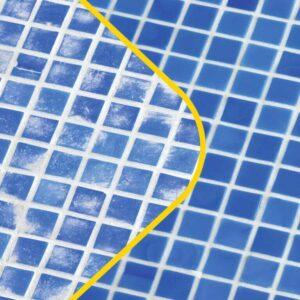
Cement Grout Haze
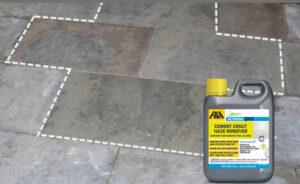
When a new installation looks cloudy or dull after grouting, cement grout haze may be the cause. As an inorganic residue, it can be investigated with DETERDEK PRO.
FILA’s post-installation cleaning guidance uses DETERDEK PRO at a 1:5 dilution on the pre-wetted surface and grout joints, with 5–10 minutes of dwell time before scrubbing, residue removal and thorough rinsing.
Epoxy, Urethane or Premixed Grout Residues
If cured epoxy, urethane or premixed grout residue is suspected, EPOXYOFF provides the appropriate cleaning route. Once the grout has fully cured according to the manufacturer’s specified curing time, EPOXYOFF can be used with a 30-minute dwell time before scrubbing and thorough rinsing.
A Sealer or Coating on the Surface
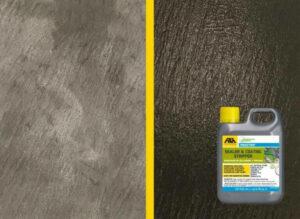
If the porcelain has a film-like appearance, consider whether a film-forming sealer or coating has been applied. PROSTRIP is ready to use, with FILA recommending at least five to fifteen minutes of dwell time before scrubbing and thorough rinsing.
What If the Cause Is Still Unknown?
Some cleaning complaints arrive with little or no history. The original installer may no longer be involved, the customer may not know which products have been used, or the surface may simply be described as difficult to clean.
In these situations, a logical sequence can help narrow down the cause. A practical test sequence is to start with PS87 PRO to investigate common organic contamination, grease, and ground-in dirt. If the problem remains and inorganic residue is possible, move to DETERDEK PRO. However, if the residue is known or suspected to be epoxy, urethane or premixed grout, use EPOXYOFF instead. If the issue still appears to be caused by an applied film or coating, consider PROSTRIP.
The surface should be assessed between treatments, with the relevant product instructions followed throughout. Cleaning products should not be mixed, and residues should be thoroughly removed and rinsed away before another treatment is considered.
Use a Before-and-After Test to Assess the Surface
For commercial projects, showrooms and distributors, arranging a comparison between an affected area and an original unused tile or sample can be particularly useful. If appropriate cleaning brings the installed tile closer to the original appearance, this provides practical evidence that the issue may be surface-related rather than a defect in the porcelain.
Once the Problem Is Solved: Maintain the Result
Once the issue has been corrected, the next step is to help prevent it from returning. Advise the customer or facilities team to use clean equipment, fresh water and the correct product dilution, with CLEANER PRO used regularly to remove everyday dirt and soil before it builds up into more stubborn contamination.
By troubleshooting the surface first, contractors and tile professionals can better determine whether a complaint is cleaning-related, help resolve the immediate issue and provide clear maintenance guidance before the porcelain itself is considered defective.
